Skip to Initiative on Catholic Social Thought and Public Life Full Site Menu Skip to main content
February 20, 2026

Democracy and the Culture of Encounter

How a Key Theme of Pope Francis Relates to Our Current Crisis

A crowd of people gathered at the Vatican to see Pope Francis

Pope Francis's call for a culture of encounter—a central theme of his pontificate—has particular relevance in our era of democratic crisis. Many scholars and commentators have emphasized the importance of civil dialogue and mutual respect if we are to move beyond our deep ideological and political divisions. Pope Francis, drawing on his theological training and experience as archbishop of Buenos Aires, developed the idea of encounter as a way to fully recognize the depth of our differences while seeking to bridge them for the common good. The Berkley Center's Thomas Banchoff and Paul Elie will be joined by two leading democratic theorists, Robert Talisse and Nadia Urbinati, for a conversation about Francis' concept and how it relates to our crisis of democracy in both the United States and around the world. Reception to follow.

This event is sponsored by the Culture of Encounter Project at the Berkley Center for Religion, Peace, and World Affairs, the Initiative on Catholic Social Thought and Public Life, and the Georgetown Democracy Initiative at Georgetown University; the Institute for Advanced Catholic Studies at USC; and Commonweal Magazine. It is made possible through the support of the Henry R. Luce Foundation.

Participants

Thomas Banchoff

Thomas Banchoff

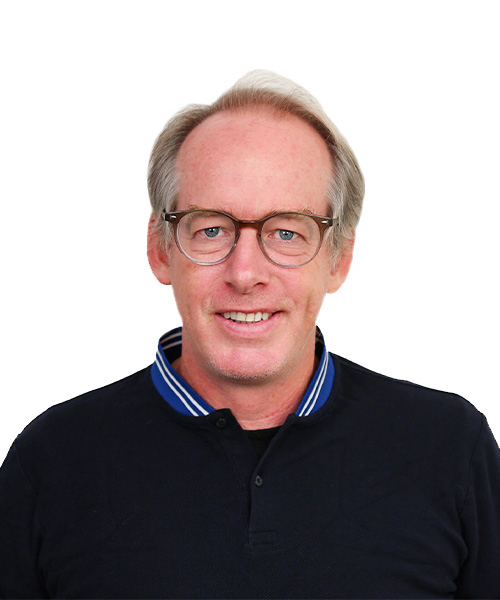
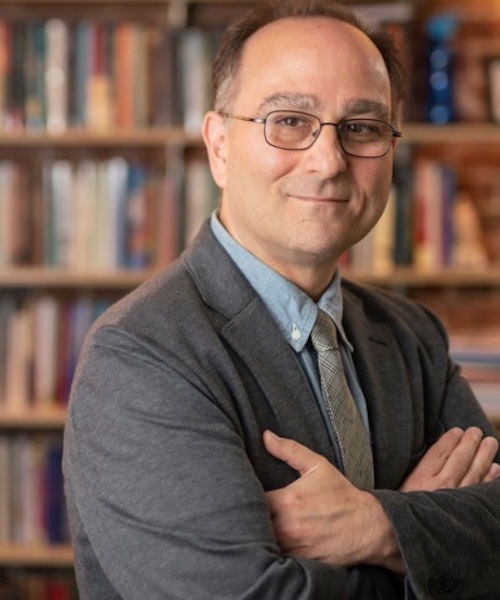
Thomas Banchoff is director of the Berkley Center for Religion, Peace, and World Affairs and serves as vice president for global engagement at Georgetown University, where he is a professor in the Department of Government and the Walsh School of Foreign Service. He is a co-convener of the Georgetown Global Dialogues and co-chairs the Task Force on Global Citizenship of the International Association of Jesuit Universities.

Paul Elie

Paul Elie

Paul Elie is a senior fellow at Georgetown University’s Berkley Center for Religion, Peace, and World Affairs, and a regular contributor to the New Yorker. He is the author of two books, The Life You Save May Be Your Own: An American Pilgrimage (2003) and Reinventing Bach: Music, Technology, and the Search for Transcendence (2012), both National Book Critics Circle Award finalists, as well as dozens of essays, articles, reviews, and prefaces for the New York Times, the Atlantic, Vanity Fair, and Commonweal, as well as the New Yorker. His third book, The Last Supper: Art, Faith, Sex, and Controversy in the 1980s, was published by Farrar, Straus, and Giroux in May 2025.

Robert B. Talisse

Robert B. Talisse

Robert B. Talisse is W. Alton Jones Professor of Philosophy and professor of political science at Vanderbilt University in Nashville, Tennessee. His research focuses on democracy, with specific attention to questions about public discourse, popular political ignorance, partisan polarization, and the ethics of citizenship. He has authored fifteen books and over one hundred scholarly articles examining how a democratic political order can assist and complicate our efforts to acquire knowledge, share ideas, understand what is of value, and address our disagreements. Talisse earned his Ph.D. in philosophy at the City University of New York Graduate School in 2001.

Nadia Urbinati

Nadia Urbinati

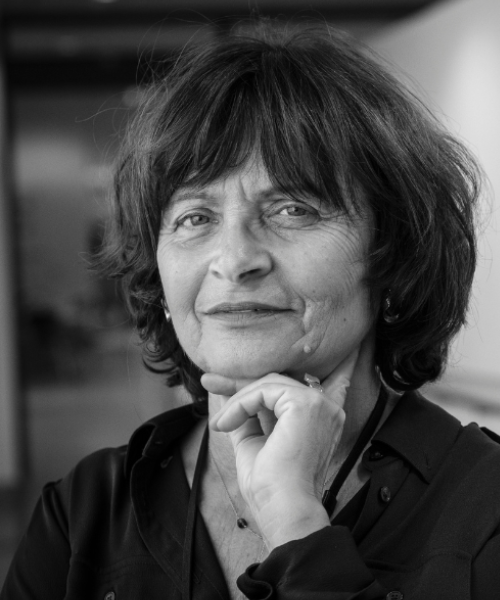
Nadia Urbinati is Kyriakos Tsakopoulos Professor of Political Theory at Columbia University’s Department of Political Science. She specializes in modern political thought, democratic and antidemocratic thought, theory of sovereignty, and representation. Her recent publications include Me The People: How Populism Transforms Democracy (2019) and The Lottocratic Mentality: Defending Democracy Against Lottocracy, co-authored with Cristina Lafont (2024). She is a member of the Accademia dei Lincei and a former member of the Institute for Advanced Studies at Princeton University. She studied philosophy at the University of Bologna and earned her Ph.D. at the European University Institute.